SGET End Terminal
The guardrail end terminal — also known as a guardrail end treatment — that exceeds federal safety standards by 33%. A crashworthy, MASH TL-3 tested end treatment that is federally certified, state-approved, and Federal-aid reimbursement eligible per FHWA control number CC-184.
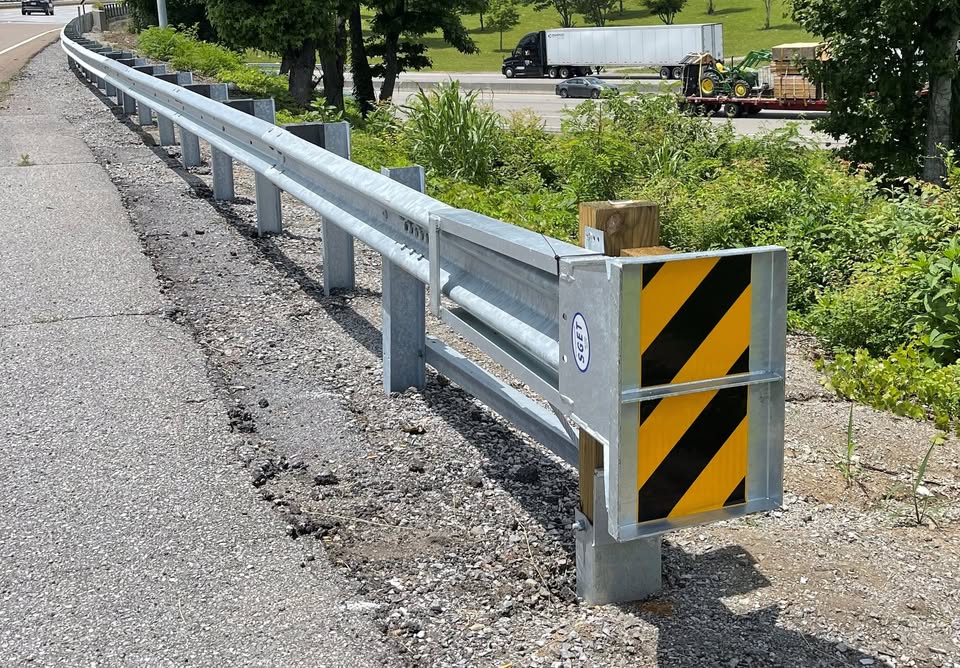
The Safest Gating End Terminal & End Treatment in the U.S.
The SGET End Terminal was rigorously crash-tested by Applus IDIADA KARCO Engineering, LLC in accordance with the AASHTO Manual for Assessing Safety Hardware (MASH), Test Level 3 (TL-3) — the federal standard for crashworthy guardrail end treatments.
Based on published MASH TL-3 crash test results, the SGET recorded the lowest occupant impact velocities (OIV) among gating end terminals tested to current federal standards — making it the safest gating end treatment available in the United States today.
- MASH Tests 3-30 through 3-37 completed and certified
- Tested by independent third-party certified laboratory
- Full crash test video documentation and reports available
- Designed to absorb and dissipate energy in head-on impacts
Install in Approximately 15 Minutes
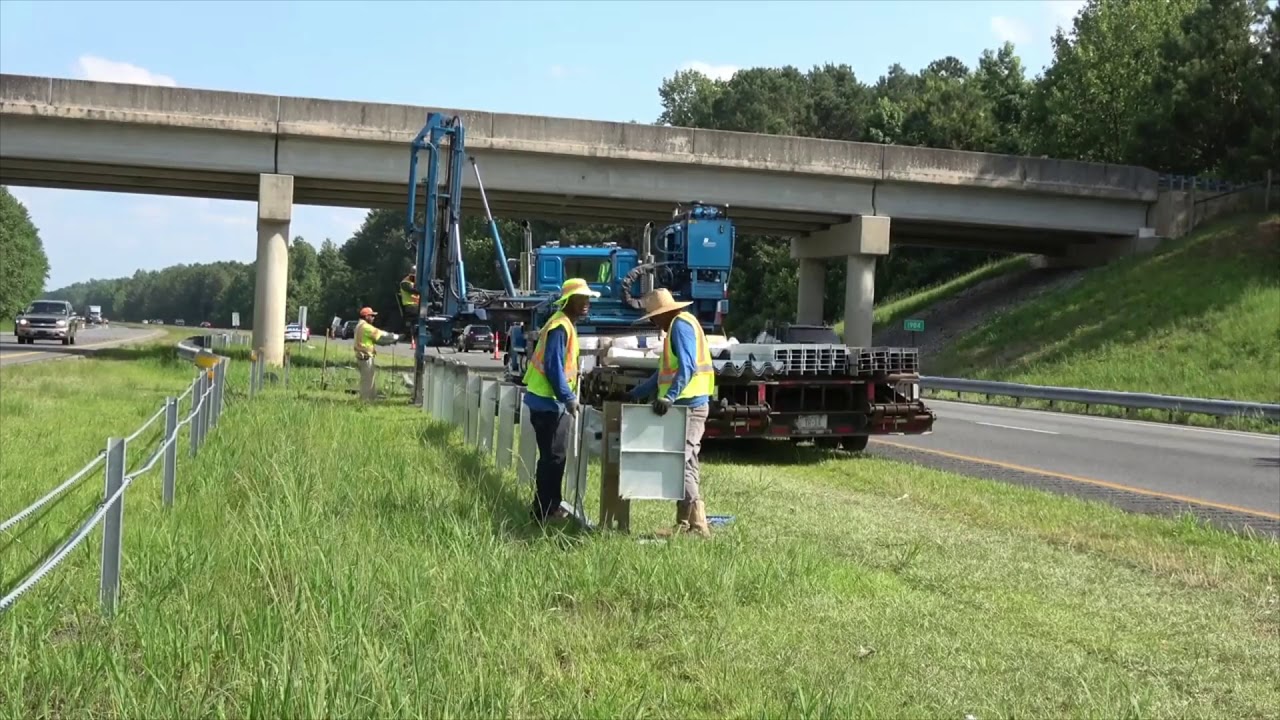
Designed for fast deployment in the field, the SGET End Terminal can be installed in approximately 15 minutes using standard equipment. The simple, intuitive design means less time in the lane closure — and less worker exposure to traffic.
Each SGET unit includes directional installation stickers to ensure correct orientation, a key innovation to prevent dangerous “Frankensteined” guardrail installations.
- No specialized equipment required for installation
- Clear directional installation labels on every unit
- Left and right-side configuration documentation included
- Reduces lane closure time and worker exposure
.webp)
RFID Asset Tracking Built Into Every Unit
Every SGET End Terminal is individually tagged with RFID technology, giving manufacturers, installers, and maintenance crews complete traceability throughout the product lifecycle.
- Unique RFID tag on every unit for instant identification
- Access complete manufacturing information in the field
- Simplifies post-incident documentation and reporting
- Multi-stage quality inspection during production
- Hot-dip galvanized per ASTM standards — maintenance-free
SGET vs. Industry Standard End Terminals
See how the SGET stacks up against conventional end terminal systems on the metrics that matter most.
| Feature | SGET End Terminal | Typical Competitor |
|---|---|---|
| FHWA Approval | CC-184 | Varies |
| Test Standard | MASH TL-3 | MASH TL-3 or NCHRP 350 |
| Performance vs. Federal Standard | Exceeds by 33% | Meets minimum |
| Typical Installation Time | ~15 minutes | 30–60 minutes |
| RFID Asset Tracking | Standard on every unit | Not available |
| Directional Install Labels | Included | Rarely included |
| Federal-Aid Reimbursement | Eligible | Varies by product |
| Independent Test Lab | Applus IDIADA KARCO | Varies |
Approved in 16 States and Growing
State transportation departments across the country have evaluated and approved the SGET End Terminal for use on their highway systems.
Don’t see your state? Contact us — we actively pursue new state approvals.
SGET End Terminal Specifications
| Specification | Value |
|---|---|
| FHWA Approval Number | CC-184 |
| Test Standard | MASH (Manual for Assessing Safety Hardware) |
| Test Level | TL-3 (Test Level 3) |
| Tests Completed | 3-30 through 3-37 |
| Performance vs. Federal Standards | Exceeds by 33% |
| Installation Time | Approximately 15 minutes |
| Asset Tracking | RFID-tagged (every unit) |
| Coating | Hot-dip galvanized (all components) |
| Hardware Coating | Hot-dip galvanized per ASTM-153 |
| Testing Laboratory | Applus IDIADA KARCO Engineering, LLC |
| Configuration | Left-hand and right-hand |
| States Approved | 16 states (AL, AZ, AR, CA, ID, IL, MS, NC, NM, OH, PA, TN, TX, VA, WA, WV) |
| Federal Aid Reimbursement | Eligible |
Crash Test Videos
Seven independent MASH Test Level 3 tests — watch footage from every camera angle.
MASH Test 3-30R · Camera View 01 — The SGET absorbs full vehicle impact and redirects safely without penetrating the occupant compartment.
Technical Downloads
Everything engineers, DOT specifiers, and contractors need to evaluate, approve, and install the SGET.
Technical Documents
MASH Test Reports
Simple 4-Step Installation Process
The SGET End Terminal is engineered for straightforward installation by any qualified highway crew.
Site Preparation
Prepare the terminal zone per project specifications. Mark post locations and ensure proper sight distance and clear zone requirements are met.
Post Installation
Drive or set the terminal posts at specified spacing. All posts and hardware are hot-dip galvanized for long-term corrosion resistance.
Terminal Attachment
Attach the SGET terminal head assembly. Check directional installation labels to confirm correct left or right-hand orientation before securing.
Final Inspection
Verify alignment, hardware torque, and RFID tag readability. Use the provided inspection checklist. Document the RFID tag number for your records.
SGET Installation Video
Watch the complete SGET End Terminal installation process from start to finish.
See It Perform When It Counts
The SGET End Terminal isn’t just certified in a test lab — it has a documented track record of real-world performance. View our post-accident field data and photography from SGET installations in service across the country.
View Field Performance Data →
Guardrail End Terminal & End Treatment FAQ
Common questions from DOT engineers, specifiers, and contractors evaluating the SGET.
What is a guardrail end treatment?
A guardrail end treatment is the crashworthy hardware installed at the upstream end of a W-Beam guardrail run. It is designed to safely absorb or redirect the energy of a vehicle striking the end of the rail head-on, preventing the rail from spearing the vehicle. "End treatment" and "end terminal" are used interchangeably by AASHTO and most state DOTs.
What's the difference between an end terminal and an end treatment?
There is no functional difference — the terms refer to the same crashworthy guardrail hardware. AASHTO documentation, state DOT specifications, and FHWA approval letters all use both terms interchangeably. "End treatment" is sometimes preferred in formal engineering specs, while "end terminal" is more common in product names and procurement.
Is the SGET MASH TL-3 compliant?
Yes. The SGET End Terminal was independently crash-tested by Applus IDIADA KARCO Engineering, LLC and passed all required MASH Test Level 3 evaluations (Tests 3-30 through 3-37). Based on published results, the SGET recorded the lowest occupant impact velocities among gating end treatments tested to current MASH TL-3 standards.
Is the SGET FHWA approved?
Yes. The SGET carries FHWA approval letter CC-184 and was awarded Federal-Aid Reimbursement Eligibility on July 9, 2025. State and local transportation agencies using Federal-aid highway funding may seek reimbursement for implementing the SGET system.
What is the difference between a gating and non-gating end terminal?
A gating end terminal is designed to allow a vehicle to pass through or behind the system during certain impact conditions — typically angled or reverse-direction hits. A non-gating end terminal redirects the vehicle back toward its original direction of travel. The SGET is a gating, tangent end treatment crash-tested under MASH TL-3.
How long does it take to install the SGET end terminal?
Approximately 15 minutes per terminal with a properly trained crew. The SGET ships as a complete kit with RFID-tagged components, splice bolts, and an inspection checklist. Detailed installation steps and a full installation video are available on this page.
Which states is the SGET approved in?
The SGET is currently approved for use in 16 states: Alabama, Arizona, Arkansas, California, Idaho, Illinois, Mississippi, New Mexico, North Carolina, Ohio, Pennsylvania, Tennessee, Texas, Virginia, Washington, and West Virginia. The SGET is also Federal-Aid Reimbursement Eligible nationwide on federally funded projects per FHWA CC-184.
How much does a guardrail end treatment cost?
Pricing depends on order quantity, project location, and shipping requirements. SPIG provides project-specific quotes within one business day. Contact us or call (276) 644-9510 for a quote on the SGET end terminal or any of our W-Beam guardrail systems.
Who manufactures the SGET end terminal?
The SGET is designed and manufactured by SPIG Industry, LLC in Bristol, Virginia. SPIG is a family-owned, AASHTO-compliant guardrail manufacturer founded in 2007. We also manufacture W-Beam guardrail systems, curved and painted railing, and full guardrail component packages.